

Yoga is far more than a fitness routine — it is a science of life and a spiritual discipline that originated thousands of years ago in India. The Sanskrit word Yoga comes from the root yuj, meaning to unite, referring to the union of body, mind, and soul.
While modern culture often highlights yoga for its physical benefits — toned muscles, flexibility, and balance — the true goal of yoga is something different. Its true goal is inner transformation and the realization of the Divine – the Parabrahma. As the great sage Maharishi Patanjali taught in his Yoga Sutras, asanas are only one of the eight limbs of yoga (Ashtanga Yoga). They prepare the body for higher states of meditation, not just physical prowess.
Didn’t know this about yoga? Let’s dive into the blog — and by the end, you’ll have all the essential basics at your fingertips.
Types of Yoga
Before diving into basic asanas in yoga, it’s important to understand the different paths yoga offers. Each path leads to the same ultimate goal — union with the Parabrahma — but suits different temperaments.
- Hatha Yoga – Balances body and mind through physical postures (asanas), breath control (pranayama), and energy locks (bandhas). “Ha” represents the sun (active energy) and “Tha” the moon (calm energy); together, they symbolize harmony. Hatha Yoga is the most beginner-friendly path and the source of the basic asanas and pranayama practices we discuss in this article.
- Bhakti Yoga – The path of devotion, love, and surrender to the Divine.
- Raja Yoga – The “royal path” based on Patanjali’s eight-limbed approach, emphasizing meditation and mental discipline.
- Karma Yoga – The path of selfless action, offering work as service without attachment to results.
- Jnana Yoga – The path of wisdom, self-inquiry, and realization of the ultimate truth.
- Kundalini Yoga – A powerful practice that awakens dormant spiritual energy through asanas, breath, and mantra.
Why Physical Fitness is Not the Ultimate Goal
In yoga, a flexible body is secondary — the real aim is a calm, focused mind and union with the Parabrahma. Asanas keep the body healthy so it can sit in meditation without distraction, but the heart of yoga lies beyond muscles and movement — in spiritual awakening.
Pranayama – The Breath of Life in Hatha Yoga
In Hatha Yoga, pranayama is as essential as asanas. The word comes from prana (life force) and ayama (expansion or control). It is the art of consciously regulating the breath to influence the flow of prana within the body.
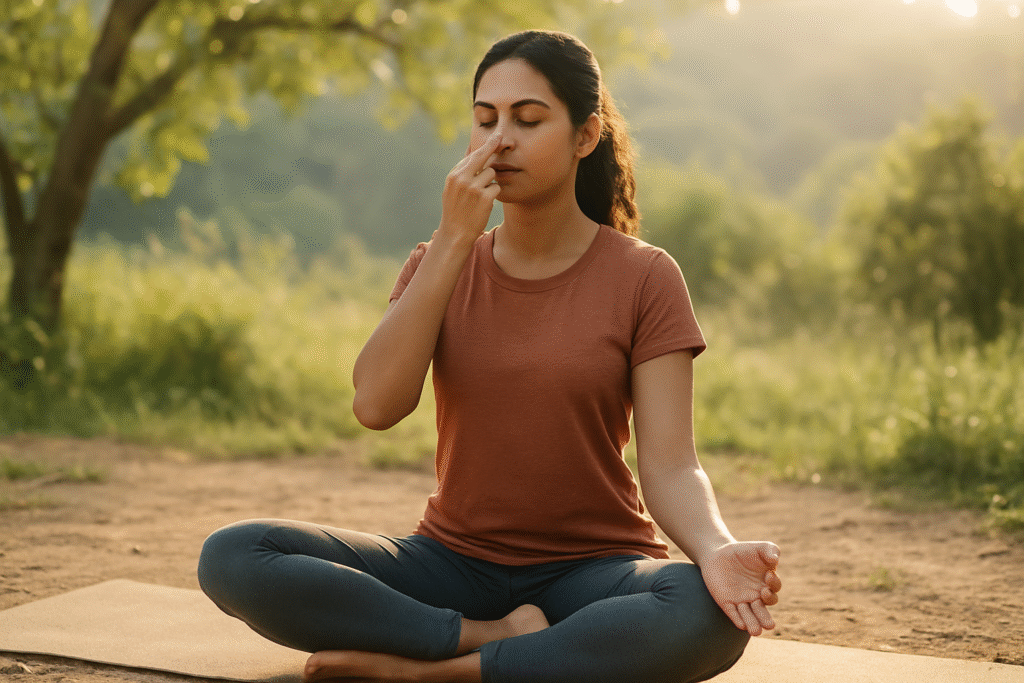
By practicing pranayama, we cleanse the energy channels (nadis), calm the mind, and prepare for deeper meditation. Common beginner-friendly pranayamas include:
- Anulom Vilom (Alternate Nostril Breathing) – Balances left and right brain, promotes mental clarity.
- Bhramari (Bee Breath) – Calms the mind, reduces anxiety.
- Kapalabhati (Skull-Shining Breath) – Energizes the body, clears toxins.
Pranayama is traditionally practiced after asanas and before meditation, making it a vital bridge between physical and spiritual practice.
Beginner-Friendly Asanas in Hatha Yoga
1. Tadasana (Mountain Pose)
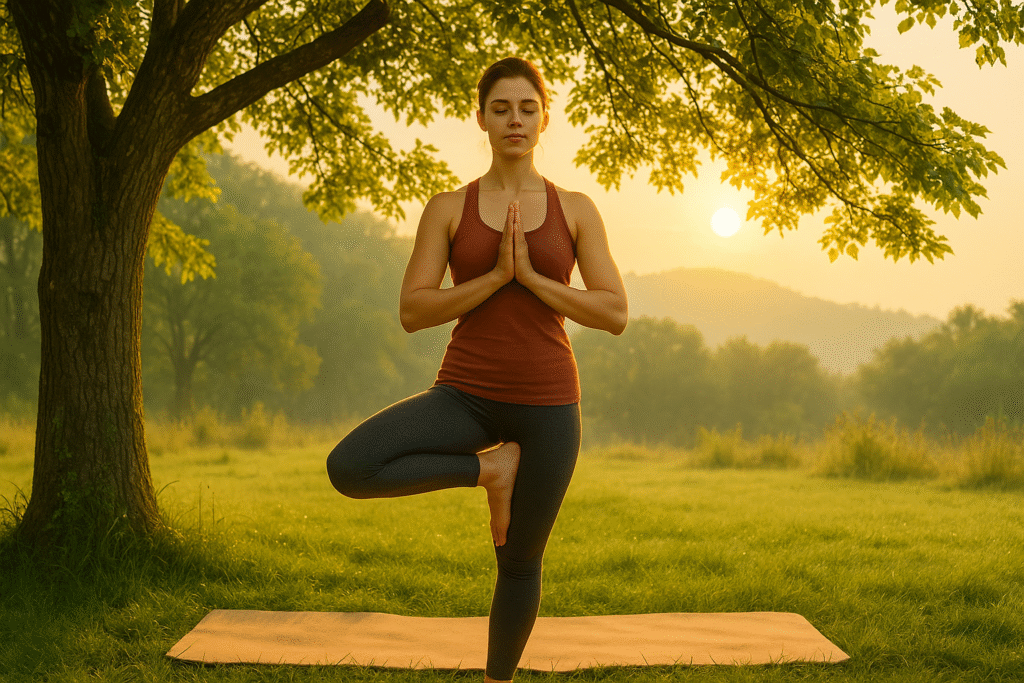
Symbolism: Stability and grounding.
Steps: Stand tall, feet together, spine straight, arms by your side. Inhale deeply, feeling the body elongate.
Benefits: Improves posture, strengthens thighs, ankles, and builds awareness.
2. Vrikshasana (Tree Pose)
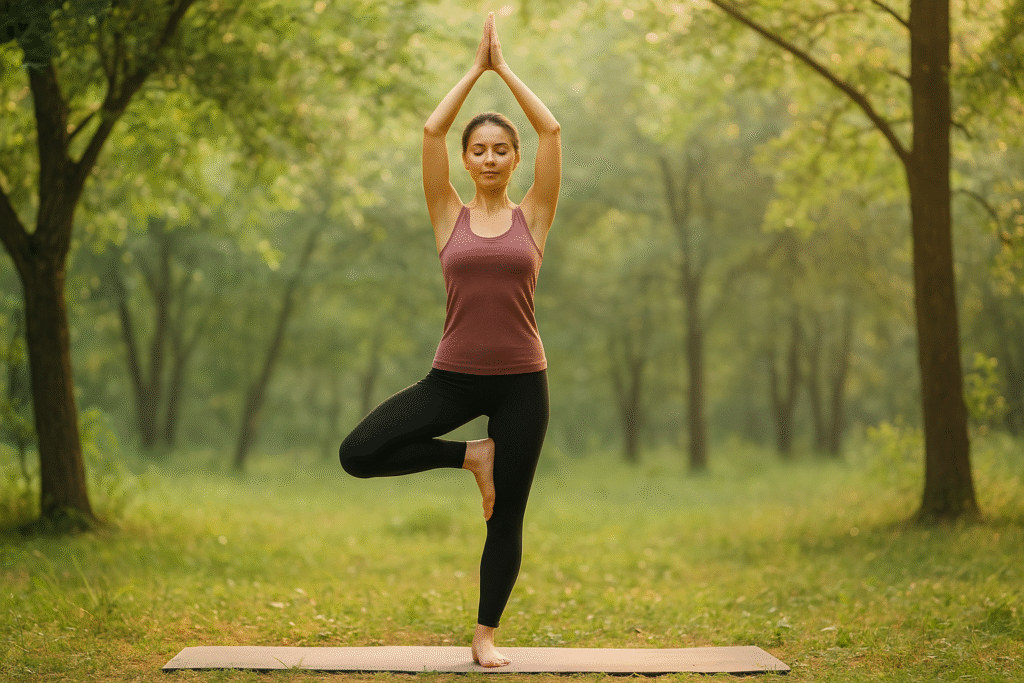
Symbolism: Balance and rootedness.
Steps: Stand in Tadasana, shift weight to one leg, place the other foot on the inner thigh, join palms at the chest.
Benefits: Improves concentration, strengthens legs, promotes stability.
3. Adho Mukha Svanasana (Downward Facing Dog)
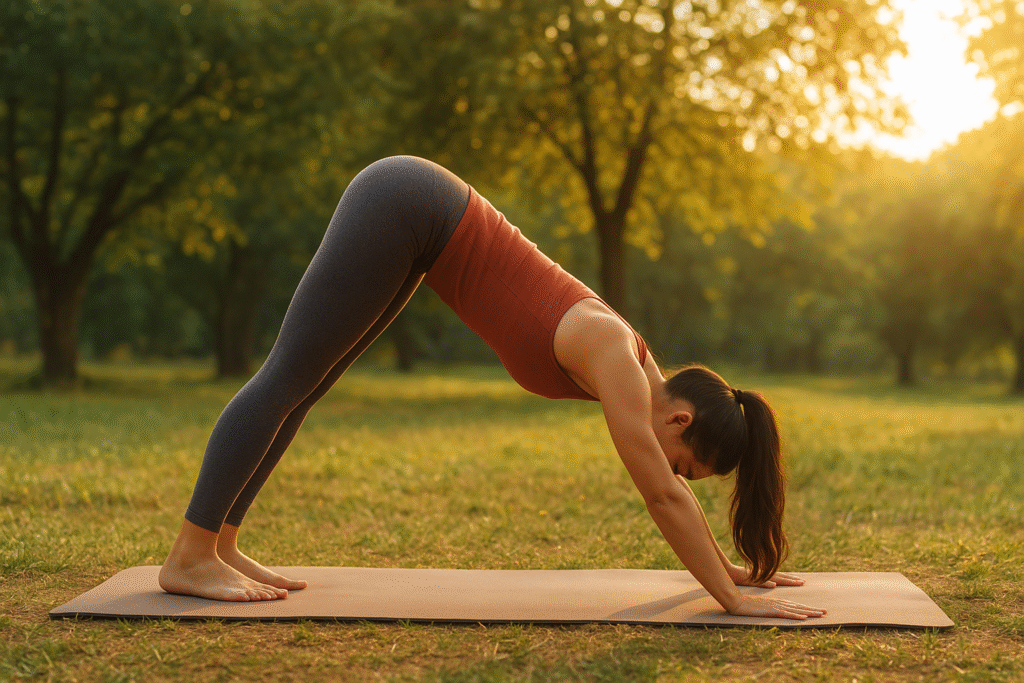
Symbolism: Surrender and rejuvenation.
Steps: From all fours, lift hips up, straighten arms and legs, keep heels pressing down.
Benefits: Stretches hamstrings, calves, and shoulders; energizes the body.
4. Bhujangasana (Cobra Pose)
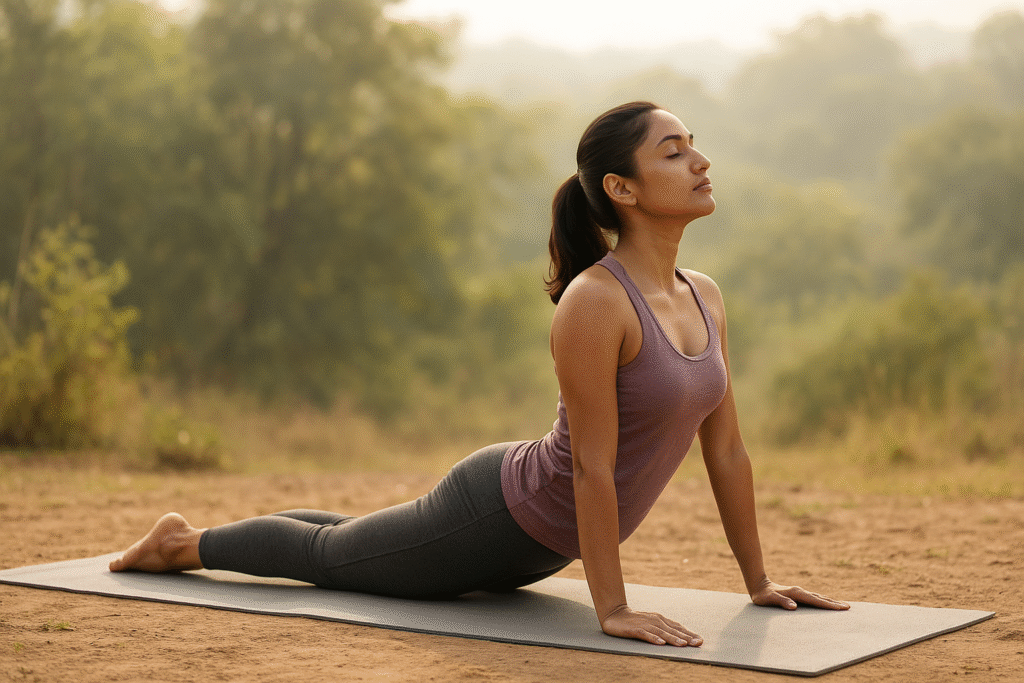
Symbolism: Awakening inner strength.
Steps: Lie on the stomach, palms beside chest, inhale and lift chest, keep shoulders down.
Benefits: Strengthens spine, opens chest, relieves fatigue.
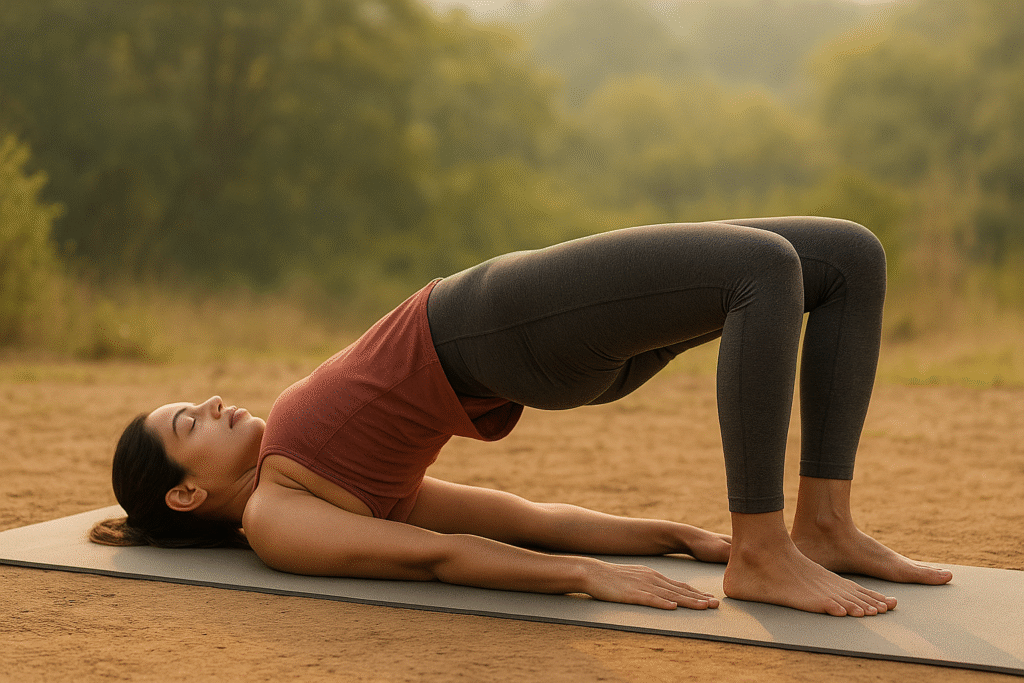
5. Setu Bandhasana (Bridge Pose)
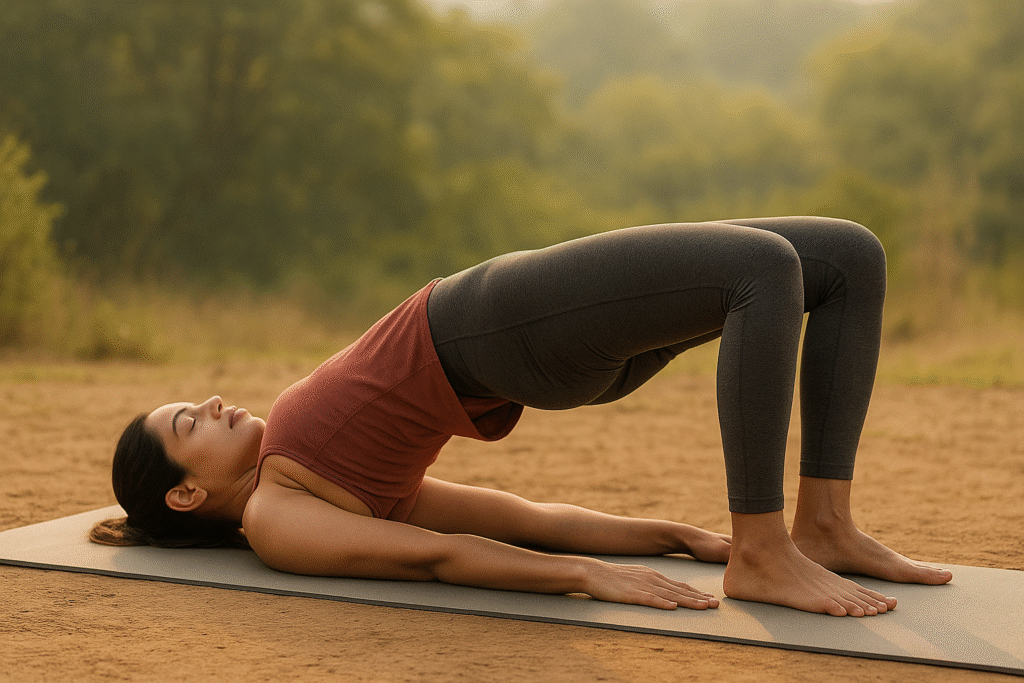
Symbolism: Building inner and outer support.
Steps: Lie on your back, knees bent, feet hip-width apart, lift hips upward, clasp hands under body.
Benefits: Strengthens back, calms nervous system.
6. Sukhasana (Easy Pose)
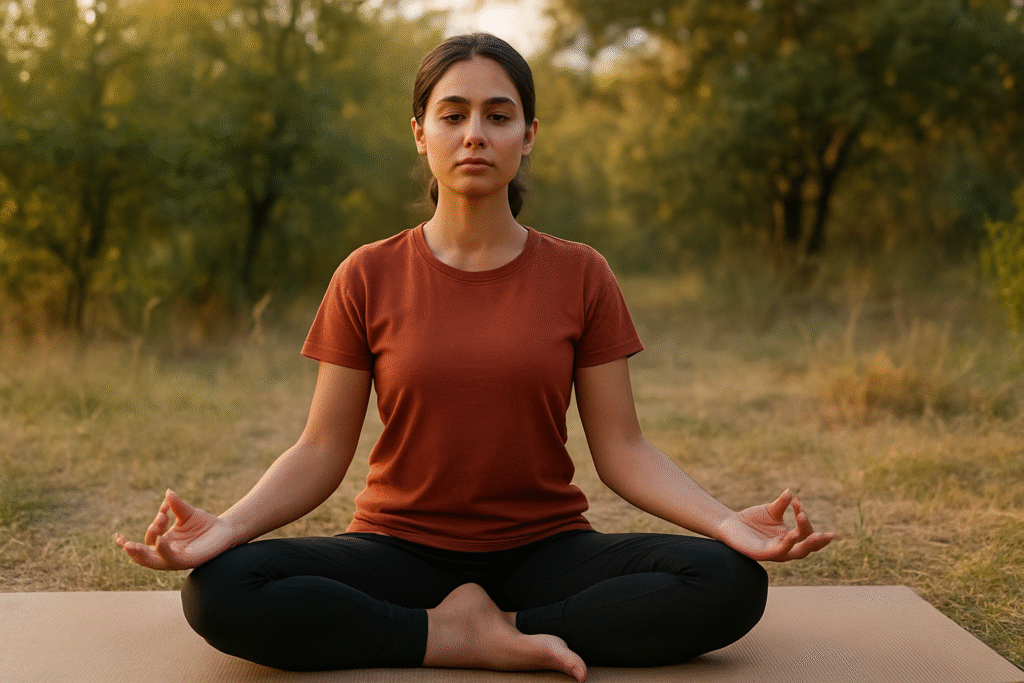
Symbolism: Simplicity and meditation readiness.
Steps: Sit cross-legged, spine erect, hands on knees, breathe deeply.
Benefits: Improves posture, reduces anxiety, prepares for meditation.
7. Balasana (Child’s Pose)
Symbolism: Humility and rest.
Steps: Kneel, fold forward with arms stretched ahead, forehead on mat.
Benefits: Relieves tension, stretches hips and thighs, promotes calm.
On average, an individual should hold each asana for 30 seconds to 1 minute, adjusting the duration based on comfort, experience, and the posture’s intensity.
Yoga as a Lifelong Journey
Starting with these basic Hatha Yoga poses and pranayama techniques gives you strength, balance, and flexibility, but more importantly, they prepare your mind for a deeper inner journey. Yoga is about being rather than doing — about finding stillness amid movement, clarity amid chaos, and experiencing the Parabrahma within.
Carrying the Spirit of Yoga Beyond the Mat
The essence of yoga is harmony — with yourself, others, and the Divine. If you wish to embody that essence even off the mat, explore Dharmadarshnam’s spiritual T-shirts inspired by India’s Dharma and Sanskriti. These designs connect you to the timeless wisdom of our culture, reminding you that yoga is not just something you practice — it’s something you live.