

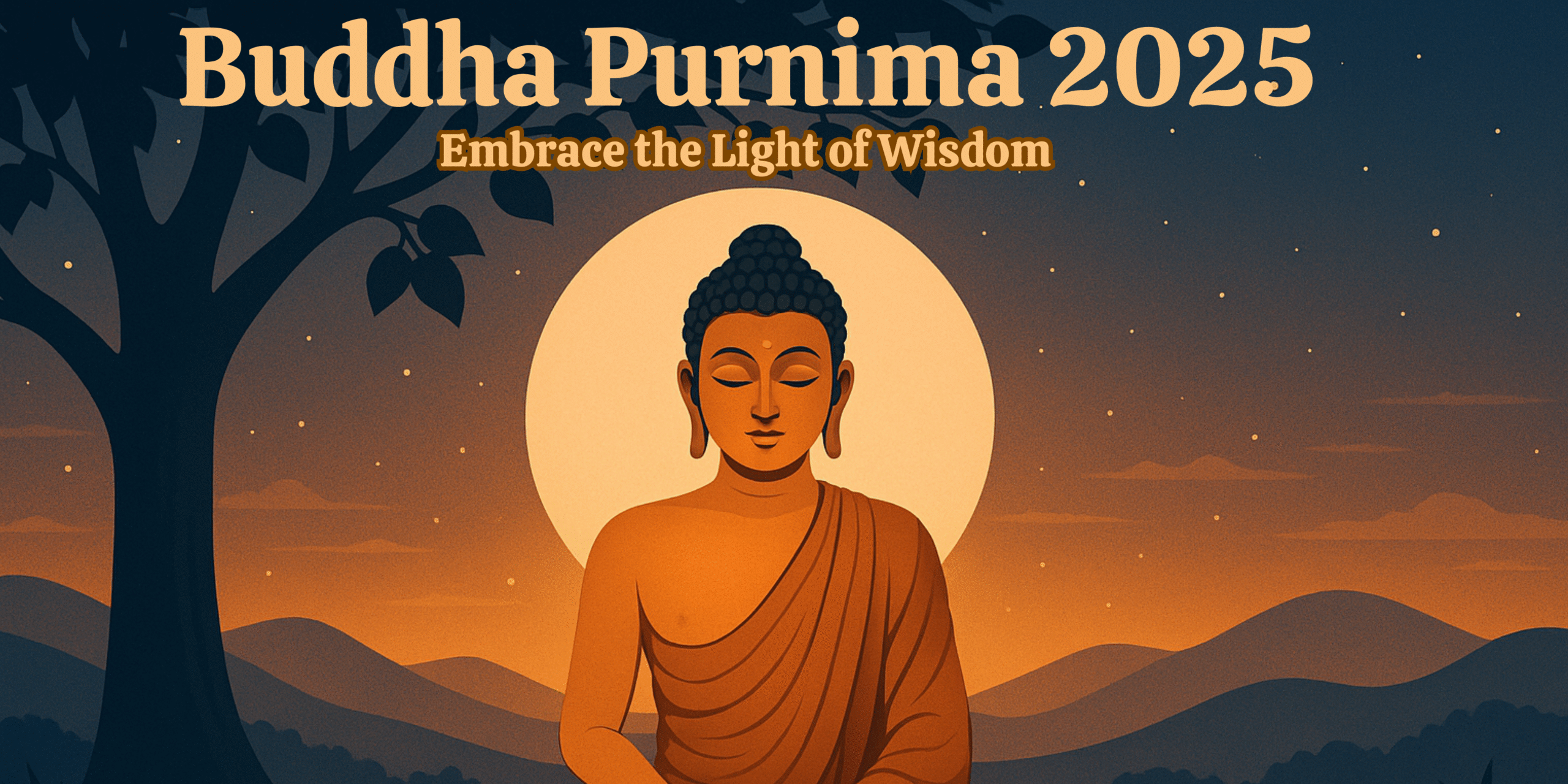
“तथागत यह नहीं चाहते कि इस अपात्र को अभी बुद्ध बना दें, बस किसी जन्म में बुद्ध बनने के योग्य पात्र बना दें।”
There’s something humbling about that thought, isn’t there? That Buddha’s path isn’t about overnight perfection, but about quiet progress—step by step, life after life, thought by thought.
As Buddha Purnima approaches on May 12, 2025, millions will light candles, offer prayers, and chant ancient verses. But here’s a thought—how much do we really know about the man we’re celebrating? Not just the lotus-seated figure on altars, but the human who once walked barefoot under Bodhi trees, questioning everything.
Buddha Purnima, also known as Vesak or Buddha Jayanti, is not just another date on the calendar—it’s a day steeped in profound significance. Celebrated on May 12, 2025, this sacred day commemorates the birth, enlightenment, and passing (Mahaparinirvana) of Gautama Buddha. It’s a triple celebration rolled into one luminous full moon night.
But wait, there’s more! Did you know that in some traditions, all three of these monumental events are believed to have occurred on the same day? That’s right—talk about cosmic timing!
In this blog, we’ll delve into the rituals, significance, and some lesser-known facts about Buddha Purnima that might just surprise you. Ready to embark on this enlightening journey? Let’s go!
When is Buddha Purnima in 2025?
Mark your calendars! In 2025, Buddha Purnima falls on Monday, May 12. This date aligns with the full moon day (Purnima) in the Hindu month of Vaishakha, a period traditionally associated with significant events in Gautama Buddha’s life.
The observance of Buddha Purnima varies across different cultures and calendars. While many South and Southeast Asian countries, including India and Nepal, celebrate it on the full moon day of Vaishakha, East Asian countries like China, Korea, and Vietnam observe Buddha’s birthday on the eighth day of the fourth month in the Chinese lunar calendar. In Japan, it’s celebrated on April 8 as Hanamatsuri, or the Flower Festival.
This variation in dates underscores the rich tapestry of Buddhist traditions worldwide, each honoring the Buddha’s legacy in their unique way.
Why Is Buddha Purnima a Big Deal? (The Significance)
Let’s put it this way: if you had to celebrate someone’s birthday, moment of enlightenment, and peaceful exit from this world—all on the same day—that person probably did something epic. And that’s exactly what makes Buddha Purnima so monumental.
According to Buddhist texts, all three major events in Lord Buddha’s life—his birth in Lumbini, attainment of enlightenment under the Bodhi tree, and Mahaparinirvana (his passing) at Kushinagar—happened on the full moon of Vaishakha. Seriously, how wild is that?
It’s not just a festival; it’s a spiritual full-circle moment. Celebrated across the globe—especially in countries like India, Nepal, Sri Lanka, Thailand, Cambodia, and beyond—it’s a day to reflect on Buddha’s teachings: mindfulness, compassion, detachment, and that all-time favorite lesson—suffering is optional (kind of).
Scholars like Richard Gombrich (author of Theravāda Buddhism: A Social History) point out that Buddha’s emphasis on personal insight over blind ritual is what makes his philosophy so timeless—even 2,500+ years later.
Bottom line? This isn’t just another holiday. It’s a soul check. A reminder that you can live with peace, purpose, and a little more kindness—without needing to wear orange robes (unless that’s your thing).
Rituals: What Do People Actually Do on Buddha Purnima?
Sure, the day’s sacred. But the rituals? They’re a beautiful blend of mindfulness, giving, and gentle rebellion against ego. Here’s what typically goes down:
🕯️ 1. Early Morning Prayers & Meditation
People kick off the day with chanting of Buddhist scriptures and deep meditation sessions—either at home or in monasteries. It’s like hitting reset on the soul. No phones. No drama. Just… stillness.
🛕 2. Temple Visits and Offerings
Devotees visit Buddhist temples, bringing along offerings like flowers, candles, fruits, and incense sticks. Each offering symbolizes something deeper:
- Flowers = impermanence
- Incense = morality
- Light = wisdom
It’s not just ritualistic—it’s deeply symbolic.
💧 3. Bathing the Buddha
Yes, there’s an actual statue-bathing ceremony! A small figure of Buddha is gently washed with scented water or herbal tea—usually poured over the shoulders. It represents purifying your soul from bad karma. Also, kind of therapeutic.
✋ 4. Observing the Five (or Eight) Precepts
Many Buddhists take a vow to follow Buddha’s basic moral code—no killing, stealing, lying, intoxicants, or inappropriate behavior. Serious practitioners go for eight precepts, which include fasting and celibacy. Hardcore, but powerful.
🧘♀️ 5. Acts of Dana (Giving)
Giving is a huge deal in Buddhism. On this day, you’ll see people:
- Donating food to monks
- Giving to the poor
- Releasing animals into the wild (more on that in a sec)
It’s about letting go of attachment—even to your money or comfort.
🥗 6. Eating Veg-Only Meals
Many folks (even meat-lovers) go fully vegetarian on Buddha Purnima to practice ahimsa—non-violence. And hey, it’s a great excuse to binge on momos and khao suey.
🕊️ 7. Releasing Birds and Animals
Here’s something poetic: people release caged birds, fish, or animals back into nature. It symbolizes liberation from suffering—not just for the animals, but for ourselves too. (Pro tip: Only do this ethically. Don’t buy animals just to release them.)
And yes—people wear white, visit monasteries, and make offerings. But here’s the catch: The Buddha wasn’t against rituals per se. He cautioned against clinging to them as the sole path to enlightenment. His teachings emphasized the importance of personal experience and understanding over blind adherence to external practices. Rituals could be helpful tools for cultivating wisdom and compassion, but they weren’t a substitute for direct insight.
In fact, in the Kalāma Sutta, the Buddha advises against following teachings based solely on tradition, authority, or ritual. Instead, he encourages individuals to test teachings through personal experience and reason, adopting those that lead to well-being and happiness.
So, while rituals can enhance our practice, they should serve as reminders and supports—not as the destination itself.
What Most People Don’t Know About Buddha Purnima
🧬 1. Buddha = Not a God
Let’s clear the air: Gautama Buddha isn’t worshipped as a god. He was a human—a royal by birth, a monk by choice, and fully enlightened by the age of 35. People follow his teachings not because he claimed divinity, but because his journey is deeply relatable. He walked away from luxury to understand human suffering and found peace through wisdom. Now that’s inspiring.
📅 2. Buddha’s Birthday = Full Moon Vibes Every Year
His birthday isn’t fixed on a date like Christmas or Diwali. Instead, it’s synced with the full moon of Vaishakha, which usually hits around April or May. Talk about celestial event-planning!
🏛️ 3. UN Recognizes It Globally
Yup, it’s that legit. The United Nations officially recognized Vesak Day in 1999 as a major international observance. Even non-Buddhist countries participate to promote peace, harmony, and meditation over meltdowns.
🌎 4. Celebrated Differently Across the World
- In Japan, it’s all cherry blossoms and baby Buddha statues.
- In Sri Lanka, they build Vesak Pandals—giant illuminated storyboards!
- In Thailand, it’s a full-blown week of community service and candlelit processions.
Same Buddha. Wildly different party themes.
📖 5. Ashoka the Great Made It Mainstream
King Ashoka, the OG content creator of Buddhism (without the Instagram), was key in spreading Buddha’s teachings across Asia. His rock edicts even mention Buddha Purnima as a holy day.
🧠 6. Buddha Wasn’t His Name
Real name? Siddhartha Gautama. “Buddha” means The Enlightened One. It’s more of a title—like “Doctor” but for wisdom.
🛤️ 7. He Never Wrote a Word
Shocking, but true. Buddha never left behind a single scroll. His teachings were passed orally for centuries. Think of it as the most legendary TED Talk ever—before anyone had a mic.
Celebrating Buddha Purnima in Your Own Way (Even Without a Temple Nearby)
Not near a monastery? No problem. Buddha’s teachings are more about practice than place.
Here’s how you can honor the day:
- 🧘♀️ Sit in stillness for 10 minutes. No phone. Just you and your breath.
- 📚 Read a few lines from the Dhammapada or listen to a short talk on mindfulness.
- 🌿 Eat a vegetarian meal mindfully—maybe even offer a silent blessing before.
- 💬 Speak kindly, listen deeply. That’s living the Eightfold Path right there.
- 🕯️ Light a candle at sunset, think of someone you’re grateful for.
- 💛 Give without expecting. Whether it’s money, time, or attention—generosity is big in Buddhism.
No robes, chants, or incense required. Just a little intention goes a long way.
🌕 Final Thoughts
Buddha Purnima isn’t about being perfect. It’s about being present.
It’s not about becoming a Buddha today, but slowly becoming worthy of it someday—just like the quote we began with.
So whether you celebrate through rituals or quiet reflection, do it in your way. The journey, as Buddha taught, begins with a single step. Or maybe, just a single breath.
As Buddha’s last words remind us:
“अप्प दीपो भव”
“Be a light unto yourself.”
This isn’t just a call to self-reliance; it’s an invitation to look within, to find your own path, and to shine your unique light in the world. 🌟